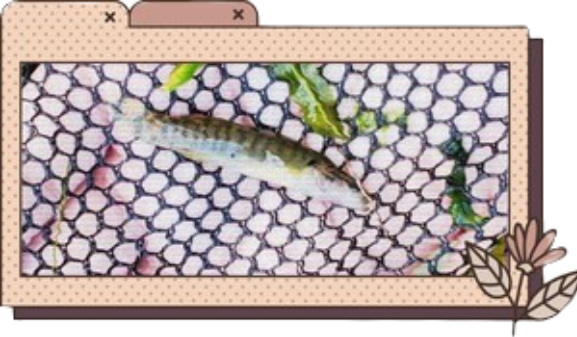
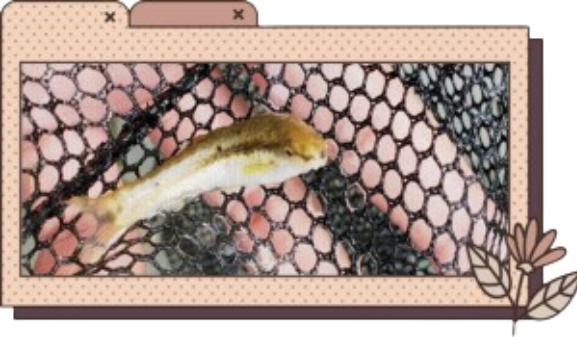
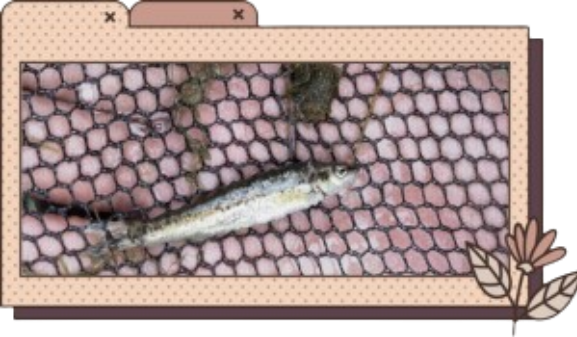
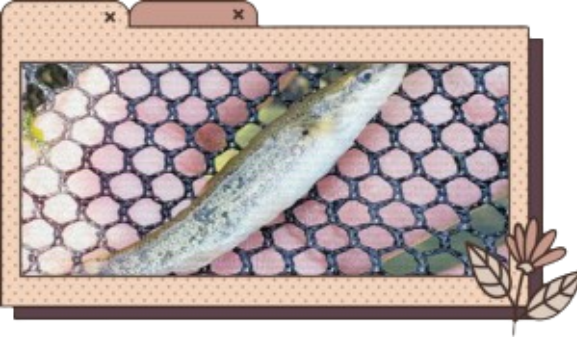
DIPNETTINGClick on the magnifying glasses to scoop through an area, move any debris from your net to see what
you found!
Click Anywhere to Scoop!
Click Anywhere to Scoop!
Click Anywhere to Scoop!
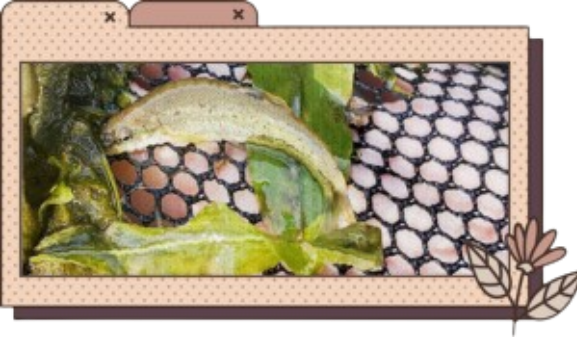
Move all the leaves to find what you caught!Click on your catch to learn about it!
Common Shiner - 30%
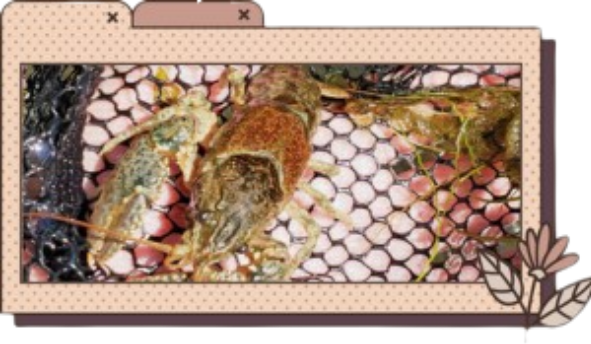
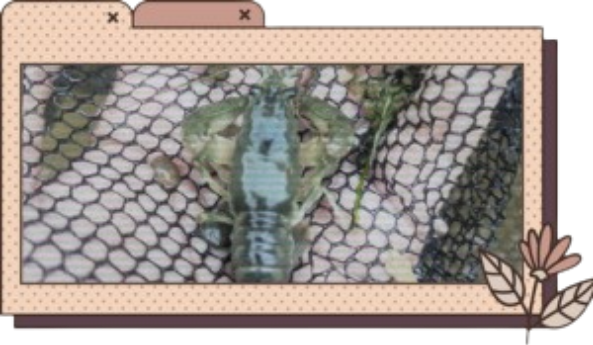
Northern Clearwater Crayfish - 20%
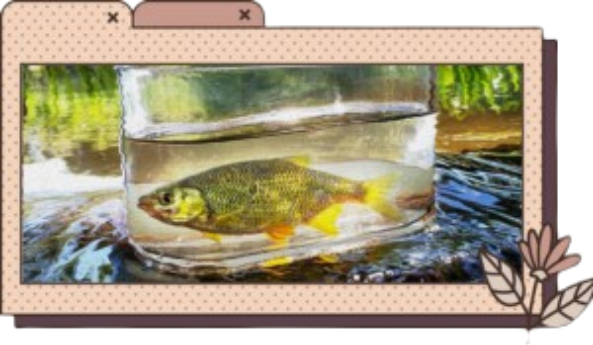
Golden Shiner - 10%
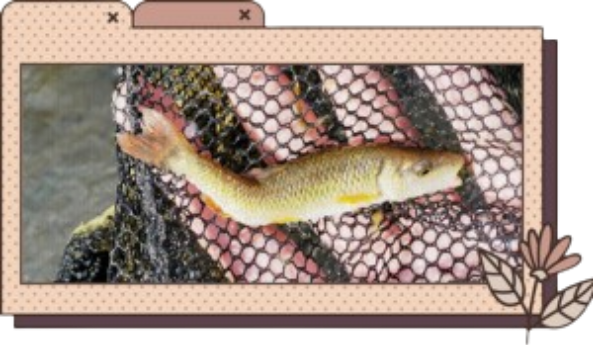
River Chub - 10%
Virile Crayfish - 10%
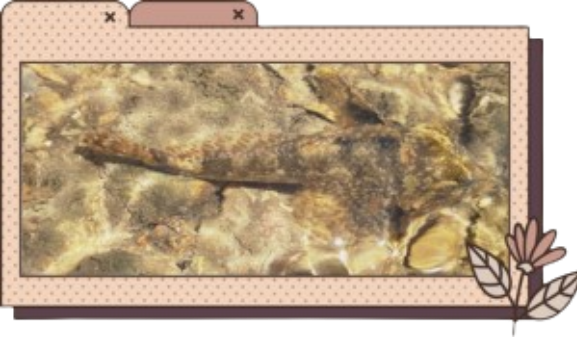
Central Stoneroller - 5%
Fathead Minnow - 5%
Big Water Crayfish - 5%
Calico Crayfish - 3%
Paintedhand Mudbug - 2%
Move all the leaves to find what you caught!Click on your catch to learn about it!
Longnose Dace - 20%
Western Blacknose Dace - 20%
Fantail Darter - 20%
Johnny Darter - 10%
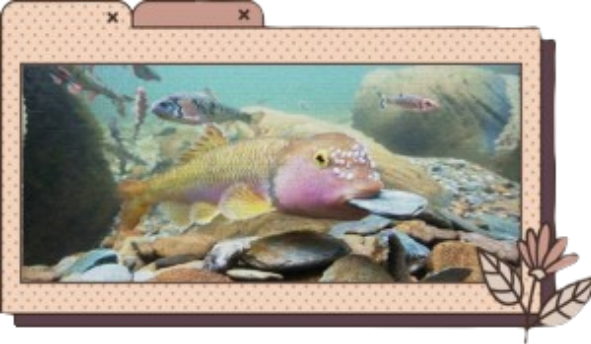
Rainbow Darter - 10%
Iowa Darter - 5%
Greenside Darter - 5%
Common Logperch - 5%
Northern Pearl Dace - 3%
Redside Dace - 2%
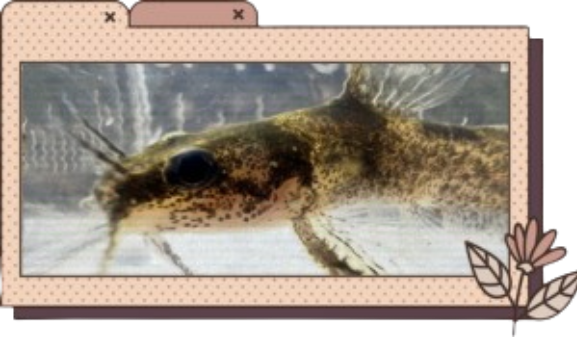
Move all the leaves to find what you caught!Click on your catch to learn about it!
Stonecat - 21%
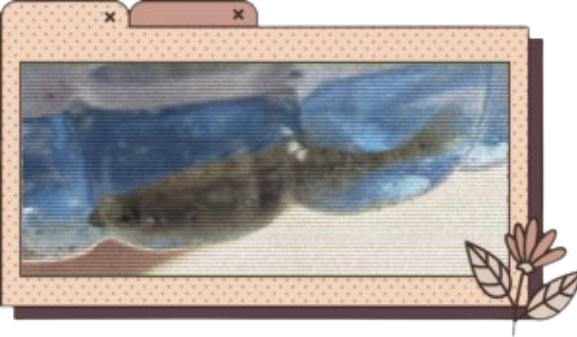
Tadpole Madtom - 15%
Blackstripe Topminnow - 15%
Slimey Sculpin - 15%
Central Mudminnow - 10%
Banded Killifish - 7%
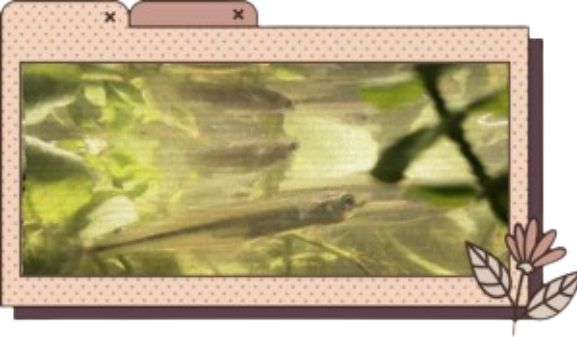
Brook Stickleback - 7%
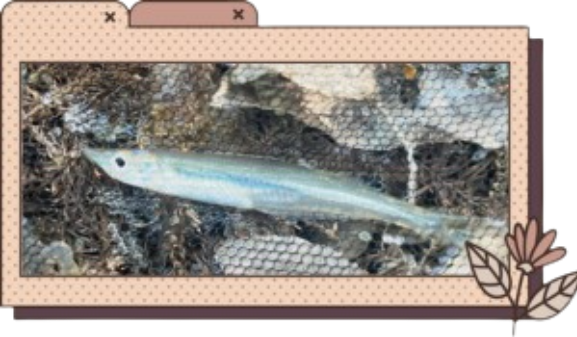
Brook Silverside - 5%
Mottled Sculpin - 3%
Brindled Madtom - 2%
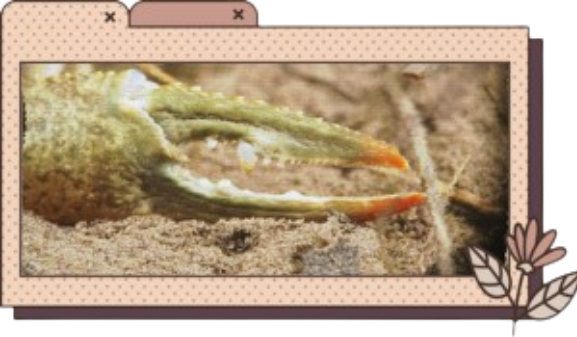
Paintedhand Mudbug
Scientific Name: Lacunicambarus polychromatus
Description: A large greenish-brown crayfish with red claws
Range: southern ends of Michigan, Indiana, Ohio, Kentucky, Tennessee, Alabama, northern Florida,
Illinois, and southern Ontario.
Habitat: As a species of burrowing crayfish, they live in muddy lowlands, partially drained
wetlands, and ditched streams
Size: about 3¼-4 inches in length
Calico Crayfish
Scientific Name: Faxonius immunis
Description: Resembles other Faxonius Crayfish, such as the Virile Crayfish, differentiated by a
notch in the finger of it's claw
Range: Most of Eastern North America(Southern Canada and Northern America) and parts of Europe as
well(due to an indivual escaping the aquarium trade)
Habitat: slow-flowing bodies of water, such as streams, ponds, marshes and roadside ditches
Size: about 1.75 to 3.5 inches in length
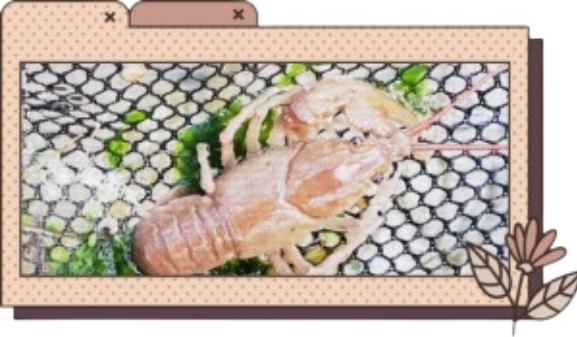
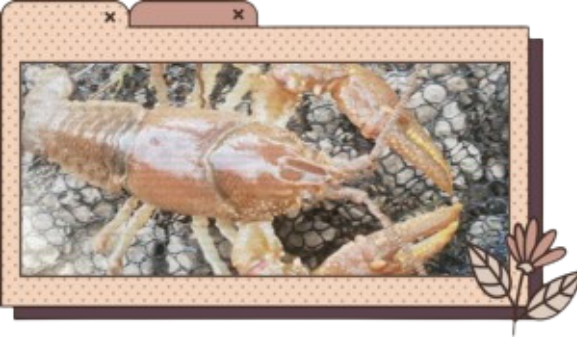
Big Water Crayfish
Scientific Name: Cambarus robustus
Description: A large and robust crayfish that is ussually a brown color and lacks the spots or
colored claws that other crayfish(such as Virile and Calico Crayfish) have
Range: Southern Ontario and most of the american north east(New York, Michigan, etc)
Habitat: Fast moving rivers and lakes
Size: about 5-8 inches (Based on personal experiance as I can't find a length on google where it
only gives the carapace length which is 2 inches)
Personal Note: One of my absolute favorite Crayfish to catch because they are the biggest crayfish
in my area and look really cool, I even caught a pinkish colored one
Fathead Minnow
Scientific Name: Pimephales promelas
Description: dull olive-grey in appearance, with a dusky stripe extending along the back and side,
and a lighter belly. There is a dusky blotch midway on the dorsal fin
Range: across North America from Chihuahua, Mexico, north to the Maritime Provinces and Great Slave
Lake drainage of Canada
Habitat: In all sorts of freshwater habitats such as lakes, streams, and ponds. They have a
surprising tolerance for low oxygen water, meaning they can handle lower oxygen habitats as well,
such as wetlands
Size: about 2-3 inches in length
Fun Fact: The males during mating season grow fleshy stubs on their face called turbicles, which
they use to fight off other males
Central Stoneroller
Scientific Name: Campostoma anomalum
Description: Rounded snout overhanging a crescent-shaped mouth, a hard ridge of cartilage on the
lower lip, and irregular patches of dark colored scales on the sides of the body. Breeding males
have orange fins and grow turbacles, similar to other minnows
Range: A large portion of the eastern, central, and midwestern United States, along with some
isolated populations in Canada and Mexico
Habitat: Midwaters and bottoms of freshwater streams and rivers but it is a tolerant species which
means it can be found in almost any stream
Size: about 3-6.5 inches in length
Fun Fact: Their names comes from the way they build their nests, during late winter, the males will
begin using their noses to roll stones along the bottom of the river to build bowl-shaped nests in
calmer waters
Virile Crayfish
Scientific Name: Faxonius virilis
Description: As juviniles, they are mostly a brown color with spots on their carapace and spots that
go down their tail. Once they get older, their carapce turns a rusty-red color and they get their
distinctive blue claws
Range: It's native to the southern ontario and much of the north-eastern USA but it's invasive to
other parts of the USA and it's also invasive to Europe as well, where it is highly invasive
Habitat: lakes, streams, and wetlands
Size: about 3-6 inches in length(The biggest I've caught was about 6in but on average, the adults I
catch are about 4in)
Personal Note: Virile Crayfish are shockingly resiliant, as compared to the other native species in
my area, I can practically find them anywhere. For example, I recently visited a local, very urban
creek, and I thought that there's no way that any fish or aquatic life live there. I was proven
wrong when I spotted 2 crayfish in there, both of them being Virile Crayfish
River Chub
Scientific Name: Nocomis micropogon
Description: A robust minnow, dark olivaceous above to dusky yellow below, with orange-red fins,
large scales, a large slightly subterminal mouth, and a small barbel at the corners of it's jaws
Range: Most of the Great Lakes and Appalachian regions
Habitat: Clear, medium to large creeks and rivers with moderate to swift current
Size: about 5-13 inches in length(I was very surprised when I went to google and learned they can
get to 13 inches long as most of the ones I've caught are are 5-7 inches in length but that seems to
be a rare occurance)
Personal Note: River Chubs, just like other Minnows, the males go undergrow a transformation during
the spring to get ready for breeding and just like the Stonerollers, these males build nests. They
build these nests by litterally picking the stones up with their mouths, which I find very cool. I
haven't caught any breeding males before but I really do hope I do soon. Unrelated, I did catch one
with
scoliosis
Golden Shiner
Scientific Name: Notemigonus crysoleucas
Description: The back is dark green or olive, and the belly is a silvery or brassy white. The
sides are silver in smaller individuals, and in clear or turbid water, but golden in larger
ones living in stained water.
Range: Throughout the eastern half of North America
Habitat: They perfer quiet waters and are therefore found in lakes, ponds, sloughs, and ditches
Size: about 2.8-14.4 inches in length(14.4in seems to be a very uncommon max but in the wild and on
average, they seem to hit 2.8-7.9 inches)
Fun Fact: It is the sole member of its genus
Northern Clearwater Crayfish
Scientific Name: Faxonius propinquus
Description: A small crayfish that is ussually a dark to light brown color, a noticable feature of
it are it's orange tipped claws and a triangular stripe/marking that runs down the tail, which is
unlike the Virile Crayfish which has spots instead(This is the usual but I have caught one that was
a bluish-grey color)
Range: Southern Ontario, Quebec(St.Lawerence area), and North-Eastern States such as New York and
Ohio
Habitat: Clear, rocky-bottomed streams, rivers, and lakes
Size: about 2-4 inches in length(The ones I ussually catch seem to be around the 3 inch range,
they're a lot smaller compared to Virile Crayfish and Big Water Crayfish)
Personal Note: This was the very first species of crayfish that I caught and it really got me into
dipnetting
Common Shiner
Scientific Name: Luxilus cornutus
Description: Silvery colored (sometimes bronze) and has an olive back with a dark dorsal stripe
Range: Found all across North America
Habitat: Rocky pools in small to medium rivers
Size: about 4-6 inches in length(The ones I catch tend to be smaller than that, being about 2-3
inches)
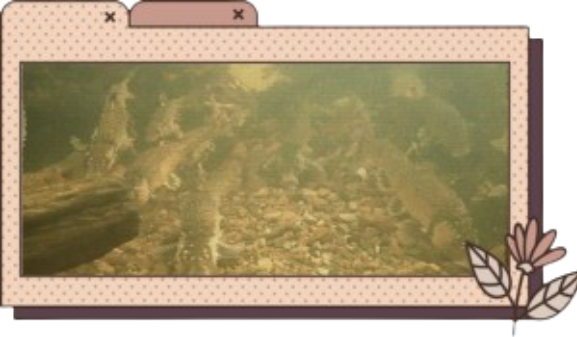
Personal Note: The ones I catch are ussually pretty small and they are a very boring looking fish,
it is pretty much the default fish. One cool thing is the time I saw a ton of them school, it really
is a sight to behold
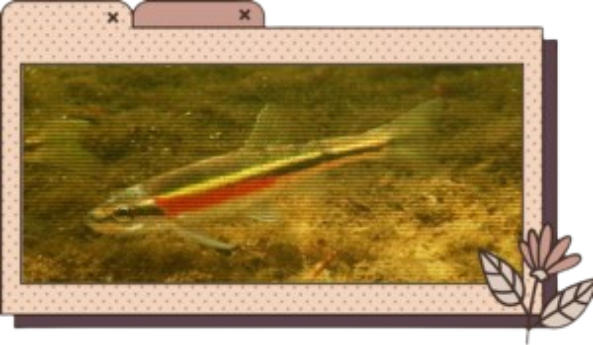
Redside Dace
Scientific Name: Clinostomus elongatus
Description: Brightly colored, with a wide red stripe extending from the head to the dorsal fin,
running along the middle of the body.[4] A bright yellow stripe generally extends from the head to
caudal fin above the red lateral stripe. The back of this fish is generally dark, ranging from green
to dark blue
Range: Most abundant in Pennsylvania, especially in the upper parts of the Susquehanna River
drainage. Populations also exist in Southern Ontario
Habitat: Slow-moving, cool, and clear headwaters of river systems
Size: about 2.6-4.7 inches in length
Fun Fact: This fish is also known as an indicator species, which means that the population of this
species in a stream can be used to determine the water quality.
Northern Pearl Dace
Scientific Name: Margariscus nachtriebi
Description: Body dark olive gray above, often with black herringbone lines, dark stripe along back;
many small black and brown specks (absent in western populations) on silver side; white, yellow or
red below; black stripe along side, black caudal spot on young; stripe vague on adult. Breeding male
has bright orange-red lower side, pale yellow stripe along belly and many small tubercles on head
Range: Atlantic, Hudson Bay, Great Lakes, and Mississippi River basins in south Canada and north USA
from Atlantic Coast to south Northwest Territories, east British Columbia, and Montana; south to New
York, Wisconsin and Iowa. Isolated population in upper Missouri River basin in South Dakota,
Nebraska and Wyoming
Habitat: Cool, clear headwater streams, bog drainage streams, ponds and small lakes, and in stained,
peaty waters of beaver ponds
Size: about 2.5-4.7 inches in length
Fun Fact: In some B.C. lakes northern pearl dace are involved in a three-way hybrid swarm with
finescale and
northern redbelly dace. Given the propensity of hybrids between the latter two species to give rise
to all female, diploid and triploid clones, the three-way cross might produce some interesting
offspring
Common Logperch
Scientific Name: Percina caprodes
Description: Pale yellow, olive, or greenish base with 15-20 narrow, dark vertical bars that run
across it's body. Their bodies are long and slender with a distinctly pointed, conical snout
Range: St. Lawrence River system in Quebec, and as far south as the Rio Grande system in southern
Texas and northern Mexico. Westwards, logperch are most heavily distributed in the Mississippi River
drainage system, and their range extends eastward in freshwater habitats all the way to the Atlantic
Ocean
Habitat: Clear, shallow to medium-depth waters, typically favoring rivers, streams, and lakes with
sandy or gravelly bottoms
Size: about 7-8 inches in length
Fun Fact: Unlike most darters which are solitary, logperch can form schools consisting of over a
hundred individuals in deep river pools
Greenside Darter
Scientific Name: Etheostoma blennioides
Description: Elongated body with a long and rounded snout. The dorsum is greenish-brown, with six
or seven dark quadrate saddles and the sides with five to eight dark green, typically U- or W-shaped
blotches. Breeding males have intensely bluish-green nasal and oral areas and sometimes black on the
head
Range: Ohio River Basin, Arkansas, Tennessee, Kentucky, Lake Erie, and Lake Ontario
Habitat: Gravel riffles of large creeks to medium rivers and often are found in swift waters over
large boulders and large rubble
Size: about 2.5 and 4.5 inches in length
Personal Note: I have only caught 1 of these from the time I visited Brantford, They look quite
similar to Rainbow Darters when they're out of color
Iowa Darter
Scientific Name: Etheostoma exile
Description: Has a small mouth and snout with scaled opercles and cheeks, two dorsal fins, one which
is a spinous-rayed fin and another soft-rayed fin. Its caudal fin is squarish and the pectoral fins
and pelvic fins are located close to each other behind the gills
Range: North to central Canada, east to New York, and south to central Illinois
Habitat: Cool, clear water over a sand or organic-matter substrate
Size: about 1.4 to 2.5 inches in length
Fun Fact: It lacks a swim bladder, causing it to sink and dart along the bottom
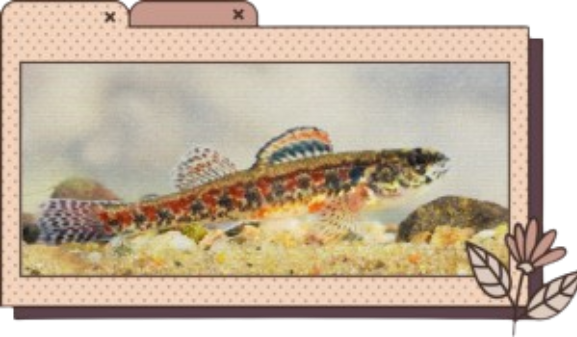
Rainbow Darter
Scientific Name: Etheostoma caeruleum
Description: Three dark spots on the back, and blue and orange in the dorsal and anal fins
Range: Throughout the eastern United States, specifically throughout the Great Lakes and Ohio River
Valley regions
Habitat: Creeks and small to medium-sized rivers
Size: About 2 to 3 inches in length(Matches what I've observed)
Personal Note: I love catching these guys, they're really colorful and beautiful even out of season
Johnny Darter
Scientific Name: Etheostoma nigrum
Description: Small, slender fish with brown to yellow scales, paler sides, and whitish bellies.
They have no bright colors and generally just have brown or black markings on a lighter tan
background. These markings are usually a series of black "w" or "x" shapes along their sides running
along their lateral lines.
Range: Saskatchewan and Colorado to the Atlantic seaboard and from Hudson Bay south to the Gulf
Coast drainage systems
Habitat: Prefer clear water with sandy and gravelly bottoms. They like slow-moving water, but can be
found in moderately cloudy, moving water, as well
Size: About 2.8 to 3.9 inches in length(I ussually catch really small ones, like 1.5 - 2 inches)
Personal Note: I first caught one of these in West Virginia and it's such a funny looking fish,
esspecially it's face
Fantail Darter
Scientific Name: Etheostoma flabellare
Description: Brown to olive coloration and dark spots that run latterally down their body. They have
a spiny dorsal fin and a wide fanshaped tail
Range: Eastern North America, from the Great Lakes and the Mississippi River basins to South
Carolina and northern Alabama
Habitat: Smaller streams that have cobbles and flat stones
Size: About 1.5 to 3 inches in length(I ussually catch them at about 2 inches in length)
Personal Note: This is the first species of darter I ever caught so it holds a special place in my
heart
Western Blacknose Dace
Scientific Name: Rhinichthys obtusus
Description: Tan to dark brown backs, lighter sides, and cream colored undersides. Dark blotches
are sporadically scattered across the sides and back. A distinctive dark colored mid-lateral stripe
from the tip of the snout to the caudal peduncle is present. They have a relatively long snout as
well
Range: Upper Mississippi, Ohio, and Great Lakes drainages, from as far north as south-central Canada
to northern Alabama and Georgia and east to eastern Lake Erie
Habitat: Young daces prefer to inhabit shallower, quiet pools with silty bottoms while more mature
daces prefer streams with consistently high turbulence patterns and plenty of places to hide
Size: About 2 to 4 inches in length(I've never caught one that was 4 inches, ussually they're
about 2 or 3 inches)
Personal Note: They look really similar to longnose daces and it's pretty difficult to distinguish
between the two, esspecially when I've seen these two species school together sometimes
Longnose Dace
Scientific Name: Rhinichthys cataractae
Description: Dorsal side is dark green to black, the lateral side is darkish to silvery with
mottling often present, and the ventral side is pearly. Both adult males and females may have bright
orange-reddish colouration at the base of pectoral, pelvic, and anal fins and on the upper lip
Range: Rocky Mountains in Northern Mexico to the Mackenzie River near the Arctic Circle
Habitat: Shallow, fast-flowing, rocky-bottomed streams and river riffles
Size: About 2.4 to 3.9 inches in length(Ussually I catch ones that are about 2.5 inches)
Personal Note: They are very common in the river in my city, I've caught like 10 in one swing
Brindled Madtom
Scientific Name: Noturus miurus
Description: Light brown, with dark dorsal splotches along the tip and two conspicuous saddle marks
just behind the dorsal fin. The dorsal fin has a dark, spotted blotch on the tip and is located
between the pectoral and pelvic fins
Range: Across eastern North America, Southern Ontario to Lousiana
Habitat: Slow-moving, warm water, and clear streams, rivers, and lakes
Size: About 4 to 5 inches in length
Fun Fact: In areas where habitats have been disturbed, they have been documented interbreeding with
other madtom species, such as the Tadpole Madtom
Mottled Sculpin
Scientific Name: Cottus bairdii
Description: Flattned, wide body, with eyes on top, a large head, and large pectoral fins. Ussually
a brownish or gray color with dark splotches
Range: Northern Canada down to the Mobile and Tennessee River drainage systems. Also commonly found
in streams in the Rocky Mountains along with many streams found throughout the Midwest United States
Habitat: Fast riffle areas with clear substrates
Size: About 3 to 6 inches in length(6 inches is the max but the average is 3-4 inches)
Fun Fact: Females lay eggs on the ceiling of a nest (usually under a rock or log), and the male
stays behind to fertilize and guard them
Brook Silverside
Scientific Name: Labidesthes sicculus
Description: Translucent green or olive body with a distinct, bright silver stripe along the sides.
Slender, Pencil-thin body with a flattened, beak-like snout containing tiny teeth
Range: All across Canada and America
Habitat: Clear, warm, slow-moving waters, including lakes, ponds, and large rivers
Size: About 2.5 and 4 inches in length(5 inches is the max)
Fun Fact: Brook silversides are well-known for jumping out of the water to catch insects
Brook Stickleback
Scientific Name: Culaea inconstans
Description: Tapered body with a slim caudal peduncle and a fan-shaped tail, 5-6 dorsal spines,
colouring is grayish or olive green with a varying amount of indistinct mottling
Range: Southern half of Canada and the northern part of the eastern United States. Also has been
introduced to Europe with a population in Finland
Habitat: Shallow, cool, clear, and well-vegetated water bodies, including small streams, rivers,
ponds, lakes, and spring-fed areas
Size: About 2 inches in length(I don't think I've caught one smaller than this)
Personal Note: They have a really unique shape, which makes them easy to ID. I learned that males
turn completely black during mating season, so I now want to catch one during mating season. Another
interesting behaivor is how the males use a glue-like substance from their kidney's to glue debris
together to make nests, which is very unique for this unique looking fish. I also caught one via
plastic
bottle while at the beach.
Banded Killifish
Scientific Name: Fundulus diaphanus
Description: Narrow, elongated bluish-gray or olive-colored body with a darker dorsal surface and
white or yellowish underparts extending to the anal fin
Range: Widely distributed throughout eastern North America
Habitat: Shallow and quiet areas of clear lakes, ponds, rivers, and estuaries with sandy gravel or
muddy bottoms and with abundant aquatic vegetation
Size: About 2 - 5 inches in length(5 inches is the max and the average is 2 - 4 inches in length)
Fun Fact: The cousins of the Banded Killifish, the Mummichog, were the first fish sent to space in
1973. Male Banded Killifish, get a blue patch near their anal fin
Central Mudminnow
Scientific Name: Umbra limi
Description: Robust body with a rounded tail fin and dark mottled coloring and a prominent, dark
vertical bar is present at the base of the tail
Range: Quebec to Manitoba in Canada and south to Tennessee and Arkansas in the US
Habitat: Slow-moving water around ponds, lakes, and streams
Size: About 2 - 4 inches in length
Fun Fact: They can gulp air using a specialized gas bladder, similarly to how Gar do. They bury
themselves tail-first in the mud during the winter to hibernate through the winter
Slimy Sculpin
Scientific Name: Cottus cognatus
Description: Wide, toad-like head with bulging eyes and a slender, tapering body. Breeding males
turn dark gray to black and develop a distinctive orange edge on their first dorsal fin
Range: Great Lakes, southeast Minnesota, northeast Iowa, southwest Wisconsin and northeast Canada.
They've also been found in eastern siberia
Habitat: Cold rocky streams or lakes
Size: About 2.5 - 3.6 inches in length
Fun Fact: They secrete a layer of mucus as a defense mechanism, hence why they're called Slimy
Sculpins
Blackstripe Topminnow
Scientific Name: Fundulus notatus
Description: Horizontal black stripe that runs the length of its body along its sides. The fish has
a small mouth that turns slightly upward, and has a flat-topped head with a multi-coloured spot on
it
Range: Southern drainage of lakes Erie and Michigan and also the Mississippi
drainage basin between Illinois and the Gulf of Mexico.
Habitat: Slow-moving or quiet, low-gradient streams, rivers, sloughs, and swamps in central North
America
Size: About 2 - 2.8 inches in length
Fun Fact: In Canada, they are only found in a roughly 60
kilometre stretch of the Sydenham River in southwestern Ontario, giving them one of the smallest
ranges of any fish in Canada
Tadpole Madtom
Scientific Name: Noturus gyrinus
Description: Dark brown back with a lighter brown color on their sides and a yellow or white
stomach. The pelvic and pectoral fins of adults are heavily covered in melanophores responsible for
pigmentation, and the dorsal and anal fins contain fewer melanophores. There are also bands of
melanophores on both the upper and lower jaws creating a dark horizontal streak along the side. Chin
barbels vary from white to being lightly covered with melanophores. The tadpole madtom possess dark
nasal and maxillary barbels and white mandibular barbels
Range: Manitoba, Ontario, Quebec, and Saskatchewan, and can be found in the Assiniboine,
Saskatchewan, Souris, Red, English, Winnipeg, and Nelson rivers. In the US, ranges from Texas to
Florida and north along the Atlantic coast to New York
Habitat: Areas with little to no current. They typically inhabit swamps and marshes, as well as
lakes and slow moving streams and rivers 0.1-1.5 meters deep and 12-24 meters wide. They also prefer
habitats with turbid water; a soft mud, sand or gravel bottom; and thick vegetation
Size: About 2 - 3 inches in length(Can max out at 5 inches)
Fun Fact: Tadpole Madtoms have two sharp spines near their chest fins. These spines can release a
mild venom, which they use to deter predators
Stonecat
Scientific Name: Noturus gyrinus
Description: Tan to grey-brown dorsally, white or pale yellow ventrally, with a straight-edged,
non-forked tail
Range: St. Lawrence-Great Lakes, Hudson Bay (Red River), and Mississippi River basins
Habitat: moderate-to-fast-moving, shallow, rocky riffles in rivers and large creeks
Size: About 4 - 8 inches in length(Can max out at 12 inches but the ones I catch are ussually 6
inches with the biggest being 8 or 9 inches)
Personal Note: The first Stonecat I caught was in Brantford and since then I've caught a ton in my
local river. I mainly catch babies, which are nearly identical to tadpoles. Stonecats are also the
largest species of madtoms, which is pretty cool